Each EU member state runs its own VAT system. The rates differ. The filing frequencies differ. The treatment of certain product categories differs. A business tax filing software solution that operates across multiple jurisdictions has to know these distinctions and apply them correctly for each transaction — there's no generic European VAT rate that applies uniformly, and there's no single submission portal that covers multiple countries at once.
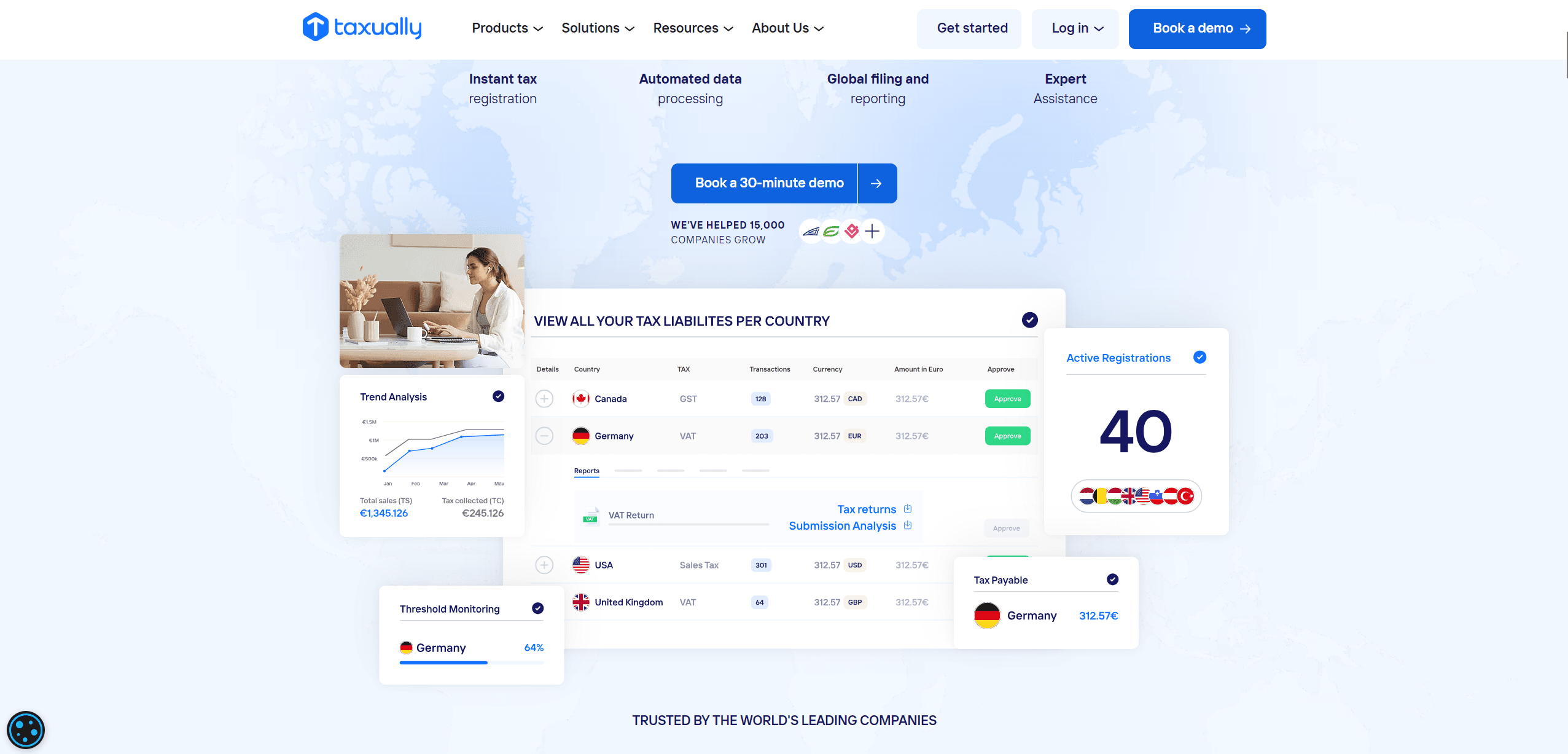
Taxually maintains jurisdiction-specific compliance logic for each market in its coverage. Germany requires VAT pre-registration before selling, which is different from France where threshold-based registration applies to some sellers. Austrian VAT rules on digital services differ from what applies to physical goods. The taxually platform accounts for these differences without requiring the user to understand each country's specific legislation — the calculation layer handles it, and the user reviews and approves the output. Whether that output is always perfectly correct for edge cases involving unusual product classifications is a separate question; the platform handles the standard cases reliably.
The EU OSS (One Stop Shop) scheme simplified some of this. Businesses that qualify can report VAT on EU-wide consumer sales through a single return filed in their home country, rather than registering separately in each destination country. But OSS doesn't cover everything. B2B transactions are excluded. Goods stored locally in EU warehouses typically require direct registration in that country regardless of OSS status. Business tax filing software that handles OSS alongside direct registrations — tracking which transactions fall under which scheme — removes a categorisation burden that creates errors when done manually at volume.
What the Taxually Company Offers Beyond Standard VAT Filing
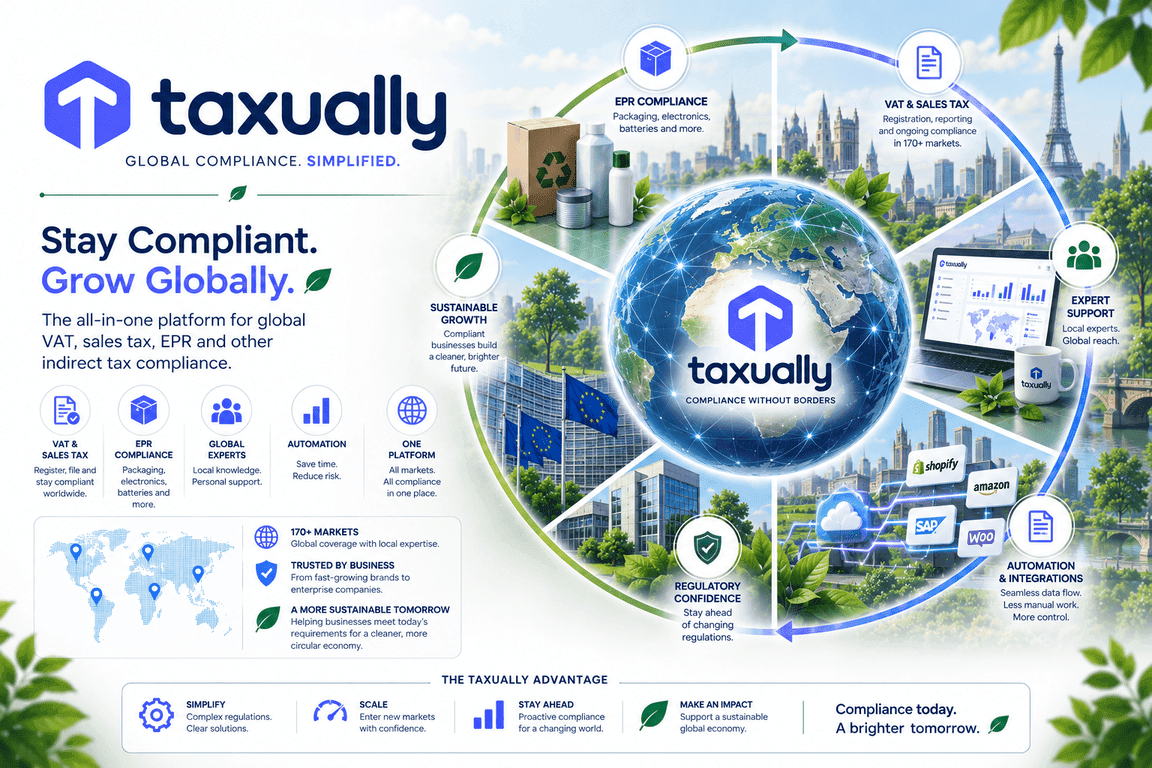
The Taxually company added EPR compliance to its platform a few years ago, partly because the same businesses using it for VAT were the ones dealing with packaging and electronics producer responsibility obligations at the same time. An e-commerce seller shipping packaged goods across the EU potentially has VAT obligations, packaging EPR registration requirements, and — if the product contains batteries — battery EPR obligations running simultaneously. Managing those through three separate service providers is inefficient; the data requirements overlap substantially.
The EPR side of what the Taxually company provides covers producer registration with national waste management schemes, quantity reporting for packaging and electronics categories, and regulatory correspondence with scheme operators. It's not as developed across all markets as the VAT offering — some smaller EU member states have thinner EPR automation depth than Germany or France — but for the major enforcement markets, the coverage is operational.
Fiscal representation is also part of the scope. Non-EU businesses selling into member states that require a local legal representative for VAT purposes need that appointment in place before they can complete registration. The Taxually company handles this in the markets where it operates, which means a non-EU seller doesn't need to separately arrange legal representation and operational filing — both come from the same provider.
Tax and Accounting Services That Cover International Tax Obligations
There's a gap that appears frequently in businesses expanding into Europe: the domestic accountant handles everything competently up to the moment cross-border VAT becomes relevant, and then the expertise runs out. Tax and accounting services for international operations require familiarity with EU VAT law, distance selling rules, Intrastat reporting, and the interaction between OSS and direct registration — and most generalist accounting firms haven't built that out, because domestic clients don't need it.
International tax compliance for physical goods businesses involves several parallel obligations. VAT on sales is the visible one. Intrastat reports cover the movement of goods between EU member states above certain thresholds. EC Sales Lists record B2B cross-border transactions within the EU. International tax also includes VAT recovery on business expenses incurred in foreign markets — a significant cost for businesses travelling to trade shows or operating foreign offices, and a process that varies by country.
The tax and accounting services taxually provides cover the filing and registration side of this. Advisory work on tax structure, permanent establishment risk, or transfer pricing isn't the platform's scope — for businesses that need that level of guidance, a specialist adviser is still necessary. What the platform handles is the operational filing load: the returns, the registrations, the submissions, the deadline calendar management across all active markets.
Taxes for Business Owners — What Taxually Automates and What It Does Not
A business owner asking "will Taxually handle my taxes?" is asking a question that doesn't have a clean yes or no answer. Taxually handles the transactional filing work — the VAT returns, the EPR quantity reports, the Intrastat submissions — across the EU markets in its coverage. It doesn't provide tax advice, handle corporation tax, deal with transfer pricing, or manage income tax for self-employed individuals. Taxes for business owners in the broader sense spans a much wider range than what any single compliance platform addresses.
Within its scope, the automation is real. Transaction data flows in from connected marketplace accounts — Amazon Seller Central, Shopify, and others — and the return calculations run from that data without manual reconstruction. Threshold alerts flag when a business is approaching a VAT registration trigger in a new country, before the obligation becomes non-compliance. Filing deadlines across all active registrations sit in a managed calendar rather than a spreadsheet someone maintains manually.
The Taxually company advisory team handles the edge cases that the platform can't resolve automatically — unusual product classifications, requests from national authorities, registration queries that require interpretation rather than calculation. Clients describe that division of labour differently: some find the advisory access easy to use, others say response times vary. That's a genuine mixed picture and worth factoring in when evaluating the service.
Reaching the Team via Taxually Phone Number and Contact Options
The taxually phone number is listed on the Taxually official website, and the contact form on the same page is the starting point for new enquiries. The form asks for product categories, target markets, and estimated volumes — information that allows the team to respond with relevant detail rather than a generic reply.
For urgent situations, the contact phone route connects to the compliance team directly. Marketplace listing suspensions triggered by missing VAT registration numbers have real revenue consequences, and waiting several days for an email response isn't viable in that situation. The phone channel exists for exactly that — time-sensitive compliance issues where a conversation resolves things faster than written communication. The taxually phone number for existing clients goes to the account manager directly rather than a general queue; new enquiries route through the main contact line.
Response times for written enquiries vary, as they do with any compliance service operating across multiple markets. During high-demand periods — the weeks around major quarterly filing deadlines in Germany and France — the team is managing a higher volume of urgent requests alongside routine work. That's context worth having when timing an initial enquiry.