
Reverse Logistics Group (RLG) provides structured reverse operations, service coordination, and process visibility for companies managing returns, recycling, and product recovery across multiple markets.
- Provides a structured model for managing returns, recycling, and product recovery.
- Supports companies operating across multiple regions and markets.
- Centralised portal gives visibility into service activity and operational documentation.
- Helps replace fragmented reverse logistics workflows with a single coordinated model.
- Reduces duplicated work across providers and internal teams.
- Most beneficial for companies already managing complex reverse operations across several markets.
- Internal teams still need to coordinate data and process updates through the portal.
- Companies with simple, single-market needs may not require the full service model.
- Implementation may require onboarding to understand the full service structure.
Reverse Logistics Group (RLG)
Many businesses that handle returns, recycling, and product recovery eventually need one structured operating model instead of several separate workflows. Reverse Logistics Group (RLG) becomes especially useful when reverse operations begin to affect reporting, service quality, and internal coordination across more than one market.
In reality, many teams only start reviewing these processes when operational pressure becomes too high and simple tools no longer work well enough. At that point, businesses view Reverse Logistics Group (RLG) not just as a service provider, but also as an integral part of a more stable business infrastructure.
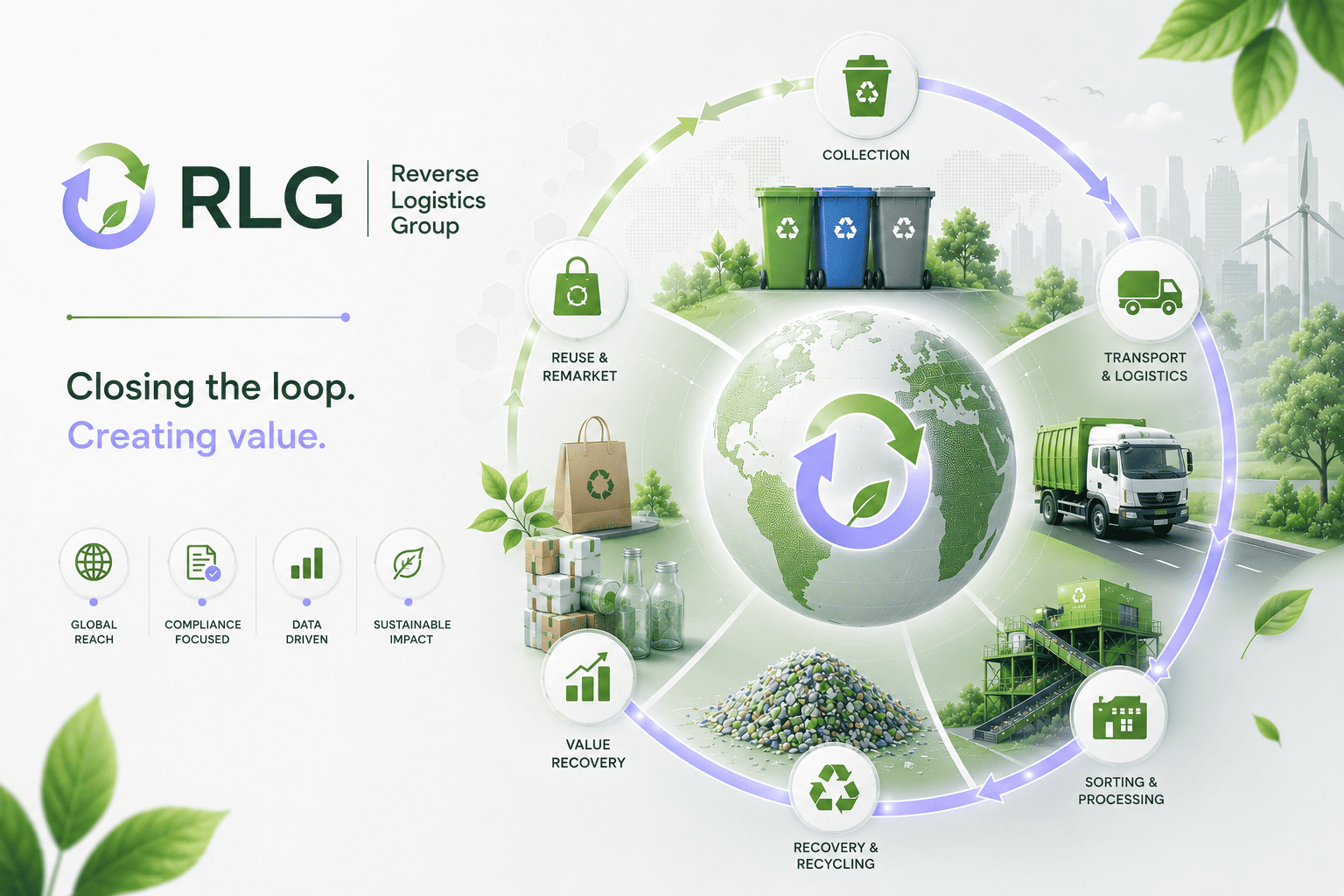
Reverse Logistics Group (RLG) Services That Help Companies Grow
Reverse Logistics Group (RLG) can help businesses that need a clearer way to handle returns, recycling, and process visibility across multiple regions. As organisations grow, RLG reverse logistics group helps replace broken routines with a more organised way of working. For many international sellers, using RLG solutions makes day-to-day operations easier to manage. At that stage, reverse logistics often stops being a side issue and becomes a key part of the business process.
Reverse Logistics Group Portal for a Clear View of Operations
Businesses can use the Reverse Logistics Group portal to track service activity, operational updates, and process documentation in one place. Access to the portal reduces the need to move between separate systems and internal records.
The structure of the Reverse Logistics Group portal makes it easier for teams and markets to see what is going on. When companies need regular reporting and a better view of service performance, that added control becomes important. For businesses that already operate in more than one region, the portal often becomes part of daily routines rather than just a secondary tool.
RLG Reverse Logistics Group for Planned Operations in Several Markets
Companies that want to improve how they handle reverse operations in more than one area can use RLG reverse logistics group. When growth makes things more complicated, the service helps make service coordination easier to understand and control. For businesses entering multiple countries at the same time, RLG can reduce duplicated work across providers and internal teams. This makes long-term expansion easier to plan and manage.
RLG Reverse Logistics Phone and Email
When companies need to speak directly about service problems or operational questions, they can use the RLG reverse logistics phone line for quicker decision-making when timing matters. Direct phone contact becomes especially valuable when service needs increase. For formal requests and documentation, reverse logistics group email provides a clear track of updates, confirmations, and ongoing coordination — especially when several teams are involved at the same time.
RLG Reverse Logistics Group in Long-Term Service Planning
As businesses grow, the need for stronger coordination across departments and markets becomes more obvious. In this context, RLG reverse logistics group helps companies that want a single service model capable of handling reverse operations with fewer internal gaps. Working with RLG also improves long-term planning because communication and process oversight become easier to align. That stability is especially valuable during periods of active market growth.
The quality of support often depends on how well businesses combine quick contact with written communication. Reverse logistics group email helps preserve formal records, while RLG reverse logistics phone supports direct clarification when urgent questions require a faster response. In larger organisations, using both creates a more complete communication structure, reducing misunderstandings and making service information easier to manage internally.
FAQ
What is Reverse Logistics Group (RLG)?
Reverse Logistics Group (RLG) is a business solution provider focused on reverse operations, service coordination, and process support for companies working across different markets.
How does the Reverse Logistics Group portal help businesses?
The Reverse Logistics Group portal helps businesses monitor operational activity, documentation, and service progress in one environment.
Why do companies use RLG reverse logistics group?
Companies use RLG when they need a more structured and scalable way to organise reverse operations across different markets.
What is RLG reverse logistics phone used for?
RLG reverse logistics phone is used for direct communication related to support questions and active service matters.
How is reverse logistics group email used?
Reverse logistics group email is used for formal requests, document exchange, and written service communication.